Thursday, 26 April 2012
LORDS REFORM, a different view....
It is inculcated into our modern psyche that if a legislative body is not directly elected by the people then it is a bad thing. This is why people want to reform the House of Lords. The truth that dare not speak its name is that the unelected Life Peers of the Lords are better at legislating than the elected members of the House of Commons. I see no problem with one Chamber representing the people, having full democratic legitimacy and ultimate legislative sovereignty, whilst the second Chamber is full of unelected wise heads skilled at legislating and representative of the community. It's just like when you form a new committee from elected persons and then notice that don't have a lawyer or an accountant or a surveyor and you need one - so you co-opt one onto the Committee, circumventing the need for an election because you need some specialist skills. That's what our Second chamber should be - one big co-opted fund of very specialist people representing all walks of life. Some parts of our community need to be better represented and some parts need to have a dramatic reduction in the numbers of their reprsentatives(Anglicans and lawyers). We are made to want to give up this wealthy fund of knowledge, skill and experience and replace it with a cloned underpowered ignorant chamber of yet more elected politicians because we feel the urge to modernise and reform - but we must always ask: will the result be any better? So long as the elected chamber remains ultimately sovereign and can win any legislative tussles (as now) then overall our Parliament will be democratic. Political nomination to the Lords should end and the appointment process needs widening and made fairer. Anybody should be able to apply and the whole House should elect its own members- starting with the current constitution as the electorate (less the residual hereditaries and most of the bishops). People will claim that it is self-selecting - but better that than selected by party leaders or dished out as reward for long service or political donation or appointed by some Govternment appointed or controlled quango. Years ago when I was at Bar School I went to a lecture by the old Earl of Halsbury who said that the Commons should give the people want they want and the Lords should give them what they need. Whilst I do not endorse such a patronising and paternalistic view of the 'people', I do think that politically driven (or media driven) legislation coming out of the Commons is often improved by proper and expert scrutiny in the Lords. I don't really care what it is called or whether its members are Lords. Whatever we do we must not throw the baby out with the bathwater. Let's have an appointed chamber of wise heads with enough power to warn, advise, opine and moderate, but never the power to prevail over the democratic will.


Wednesday, 25 April 2012
HMQ to visit Greenwich today..........

to receive an impressive gift:
The Royal Barge Gloriana (at Greenland pier):

(which will lead the Royal River Pageant on 3rd June:)

and will then move on to re-open this fine restored old lady (looking great at the Marathon at the week-end):
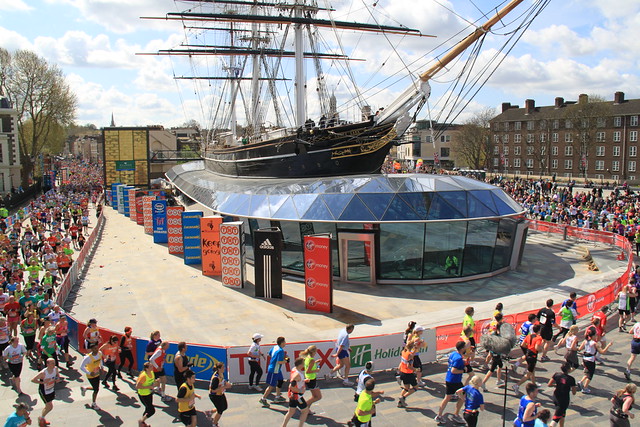
and then will open this excellent exhibition:

Just like she did with her parents in 1937:

Floreat Regina!
Pity about the rain

UPDATE:
Some happy and glorious pictures of the event


Sunday, 22 April 2012
Who is going to select the new President of the Supreme Court?
Schedule 8 Constitutional Reform Act 2005 requires a commission constituted as follows:
A selection commission consists of the following members—
(a)the President of the Supreme Court;
(b)the Deputy President of the Supreme Court;
(c)one member of each of the following bodies—
(i)the Judicial Appointments Commission;
(ii)the Judicial Appointments Board for Scotland;
(iii)the Northern Ireland Judicial Appointments Commission.
We know who Lords Phillips and Lord Hope are and we know what they do in real lilfe - what about the lay majority? JAC Scotland and the JAC have sent their chairs. NI's chair is the LCJ of NI and so a lay member has been sent.
So who are they?

Professor Nichola Rooney
Judicial Appointments Commission for Northern Ireland
Professor Rooney has been a Consultant Clinical Psychologist in the Health Service for 18 years. For the past 9 years she has worked as a senior manager at the Royal Hospitals Belfast and since 2008 has been Head of Psychological Services at the Belfast Health and Social Care Trust. From 2002 - 2004 Professor Rooney was appointed by the Minister for Health as a member of the Human Organs Inquiry Relative's Reference Group. She has been involved in a number of Department of Health Committees for Policy Development, most recently in relation to the organisation and delivery of Psychological Therapies in Northern Ireland.
Professor Rooney is Chair of the Division of Clinical Psychology Northern Ireland, a member of the Executive of the Division of Clinical Psychology UK and a Professional Officer of the Regulation and Quality Improvement Authority Mental Health and Learning Disability Review Team.
Her research in the area of Child Psychology has been disseminated through publication in academic journals and presentations at national and international conferences.
As an honorary senior lecturer at Queen's University Belfast, Professor Rooney has lectured frequently on post-graduate medical and clinical psychology doctorate courses. She is a member of the Board of Studies for the Clinical Psychology Doctorate.
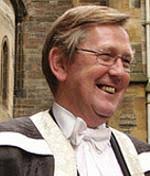
Sir Muir Russell KCB
Chair, Judicial Appointments Board for Scotland
He joined the Scottish Office in 1970 and became Secretary of the Scottish Development Agency on its establishment in Glasgow in 1975. He wasPrincipal Private Secretary to the Secretary of State for Scotland from 1981 to 1983 and was seconded to the Cabinet Office in 1990. He was appointed Permanent Secretary at The Scottish Office in May 1998, and to the Scottish Executive since its establishment in 1999.
He was widely believed to be primarily responsible for the massive overspend on the new Scottish Parliament Building and was criticised by Lord Fraser of Carmyllie's enquiry for failing to keep the politicians informed that the expenditure was far in excess of the budget.He took office as Principal of the University of Glasgow on 1 October 2003, but attracted much criticism for his handling of the 2006 lecturers' strike, as well as attempts to close the University'sCrichton Campus in Dumfries and for receiving pay rises which were much greater than the rate of inflation.[2] He retired in October 2009, and was succeeded by Professor Anton Muscatelli, former Vice-Principal of the University and former Principal of Heriot-Watt University, Edinburgh. On 7 October 2008, Scottish Justice Secretary Kenny MacAskill announced Sir Muir would succeed Sir Neil McIntosh as Chairman of the Judicial Appointments Board for Scotland.[3]
In December 2009 he was appointed to head an independent investigation[4][5] into allegations concerning the Climatic Research Unit email controversy. The inquiry reported on 7 July 2010, largely clearing the UEA of the allegations. However, the panel also concluded the scientists were insufficiently open about their work and unhelpful and defensive in response to freedom of information requests. [1]. Critics characterized the Russell Report as a "whitewash" [6]

Christopher Stephens
Chair, Judicial Appointments Commission for England and Wales
Christopher Stephens is a non-executive director of WSP, a global engineering consultancy and Holidaybreak plc. He was Chairman of the DHL (UK) Foundation, a charity committed to community development and education projects both in the UK and worldwide, until May 2011 and Chairman of Traidcraft plc until March 2011. Christopher was a member of the Senior Salaries Review Board and a Civil Service Commissioner. Until 2004, he was Group Human Resources Director of Exel (now DHL).
A consultant clinical psychologist from Belfast, the former top civil servant in Scotland and the Principal of the University of Glasgow and a corporate chair from London. The corporate, civil service, academic and scientific/medical worlds all represented - a cosy professionals get together...but would our elected representatives do any better?
Should be interesting.....................

Professor Nichola Rooney
Judicial Appointments Commission for Northern Ireland
Professor Rooney has been a Consultant Clinical Psychologist in the Health Service for 18 years. For the past 9 years she has worked as a senior manager at the Royal Hospitals Belfast and since 2008 has been Head of Psychological Services at the Belfast Health and Social Care Trust. From 2002 - 2004 Professor Rooney was appointed by the Minister for Health as a member of the Human Organs Inquiry Relative's Reference Group. She has been involved in a number of Department of Health Committees for Policy Development, most recently in relation to the organisation and delivery of Psychological Therapies in Northern Ireland.
Professor Rooney is Chair of the Division of Clinical Psychology Northern Ireland, a member of the Executive of the Division of Clinical Psychology UK and a Professional Officer of the Regulation and Quality Improvement Authority Mental Health and Learning Disability Review Team.
Her research in the area of Child Psychology has been disseminated through publication in academic journals and presentations at national and international conferences.
As an honorary senior lecturer at Queen's University Belfast, Professor Rooney has lectured frequently on post-graduate medical and clinical psychology doctorate courses. She is a member of the Board of Studies for the Clinical Psychology Doctorate.
Sir Muir Russell KCB
Chair, Judicial Appointments Board for Scotland
He joined the Scottish Office in 1970 and became Secretary of the Scottish Development Agency on its establishment in Glasgow in 1975. He wasPrincipal Private Secretary to the Secretary of State for Scotland from 1981 to 1983 and was seconded to the Cabinet Office in 1990. He was appointed Permanent Secretary at The Scottish Office in May 1998, and to the Scottish Executive since its establishment in 1999.
He was widely believed to be primarily responsible for the massive overspend on the new Scottish Parliament Building and was criticised by Lord Fraser of Carmyllie's enquiry for failing to keep the politicians informed that the expenditure was far in excess of the budget.He took office as Principal of the University of Glasgow on 1 October 2003, but attracted much criticism for his handling of the 2006 lecturers' strike, as well as attempts to close the University'sCrichton Campus in Dumfries and for receiving pay rises which were much greater than the rate of inflation.[2] He retired in October 2009, and was succeeded by Professor Anton Muscatelli, former Vice-Principal of the University and former Principal of Heriot-Watt University, Edinburgh. On 7 October 2008, Scottish Justice Secretary Kenny MacAskill announced Sir Muir would succeed Sir Neil McIntosh as Chairman of the Judicial Appointments Board for Scotland.[3]
In December 2009 he was appointed to head an independent investigation[4][5] into allegations concerning the Climatic Research Unit email controversy. The inquiry reported on 7 July 2010, largely clearing the UEA of the allegations. However, the panel also concluded the scientists were insufficiently open about their work and unhelpful and defensive in response to freedom of information requests. [1]. Critics characterized the Russell Report as a "whitewash" [6]

Christopher Stephens
Chair, Judicial Appointments Commission for England and Wales
Christopher Stephens is a non-executive director of WSP, a global engineering consultancy and Holidaybreak plc. He was Chairman of the DHL (UK) Foundation, a charity committed to community development and education projects both in the UK and worldwide, until May 2011 and Chairman of Traidcraft plc until March 2011. Christopher was a member of the Senior Salaries Review Board and a Civil Service Commissioner. Until 2004, he was Group Human Resources Director of Exel (now DHL).
Friday, 20 April 2012
That's why I joined up...Miss Middleton and what a performance from that Scots judge.....

The shortest answer is to say that we don't defend people who are guilty of these crimes; we defend people who are accused of them and who tell us they are not guilty. Contrary to just about every drama series on TV, barristers do not provide their clients with defences. It's the other way around: clients give us their instructions, and we are bound to act strictly upon them. The joke among barristers is that if we were in the business of providing our clients with defences, we'd come up with something a damn sight better than they do.
The more complex answer is that one of the most fundamental rules of our profession, and what distinguishes barristers from all other advocates such as solicitors, is the cab-rank principle: we are obliged to act for our clients and we cannot refuse to act because the nature of the case is personally objectionable to us or to a section of the public, or because the conduct, opinions or beliefs of the client are unacceptable. It is enshrined in our code of conduct, and we fight hard to preserve it. That means that we cannot refuse to act for the sex offender who claims that the 11-year-old girl was sexually precocious and "led him on", the antisemitic terrorist who says that the bomb in a public place was just a hoax, the demonstrators who want to kill a cartoonist, or the woman accused of torturing her baby to death. The rule applies whether the client is paying privately or is publicly funded.
And who would want it any other way? It's not for us to substitute our opinion of guilt, still less our distaste or repugnance, for the judgment of the court. What kind of society would we have if barristers could choose not to represent defendants merely because they disapproved of their views? That's a short route to a police state. How are the poor, the ill educated, the illiterate and the disadvantaged to defend themselves against the state with all its powers and resources if they cannot call upon advocates to guide them through the thickets of the law, to speak on their behalf, and put their case fairly before the court?
Did Pippa Middleton break French criminal law?
Waving a gun, real or fake, at a photographer is a crime in France. Pippa Middleton and her friend, allegedly a lawyer, are reported to have been questioned by French police. Has she broken the law?
Plus I am loving Scots judicial robes - and what a brilliantly dour TV performance...
Monday, 16 April 2012
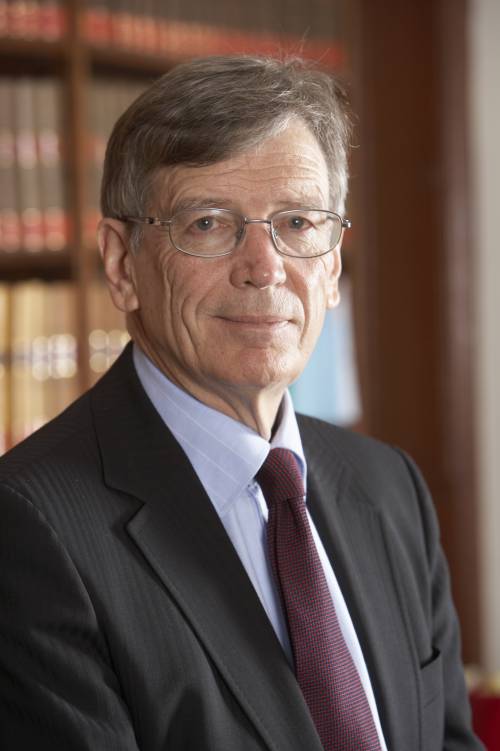
The Right Honorable Lord Carnwath of Notting Hill CVO
Thursday, 12 April 2012
EASTER AGAIN AND THE MOON IS STILL IN CHARGE
I know that the Govt has a lot on its plate - but could it please bring this Act into force so that we stop having live our lives according to the whims of the moon.....Here is the post I wrote this time last year....http://ofinteresttolwayers.blogspot.co.uk/2011/04/happy-easter.html
Wednesday, 28 March 2012
Ward LJ on boundary disputes....

A little extract from a recent judgment, with some highlighting from me....

Lord Justice Jackson
I agree that this appeal should be dismissed for the reasons stated by Lloyd LJ. I wish to add a comment about the manner in which the litigation has been conducted.
This case concerns a dispute between neighbours, which should have been capable of sensible resolution without recourse to the courts. During the course of his submissions in the Court of Appeal Mr Pearce for the claimants observed that this may not be an "all or nothing" case. A moderate degree of carpeting in flat 8 might (a) reduce the noise penetrating into flat 6 and (b) still enable the occupants of flat 8 to enjoy their new wooden floor. This is precisely the sort of outcome which a skilled mediator could achieve, but which the court will not impose.
Of course there are many cases where a strict determination of rights and liabilities is what the parties require. The courts stand ready to deliver such a service to litigants and must do so as expeditiously and economically as practicable. But before embarking upon full blooded adversarial litigation parties should first explore the possibility of settlement. In neighbour disputes of the kind now before the court (and of which I have seen many similar examples) if negotiation fails, mediation is the obvious and constructive way forward.
In the present case a mediator would not have been concerned about the interaction between the various leases and the licence to carry out works. Nor would he have been concerned about the other interesting points of construction, which first the county court judge and now this court have been called upon to decide. Instead he would have been helping the parties to find a sensible resolution of the practical problem which had arisen. I have little doubt that such a mediation would have been successful. The points of law upon which the litigation has turned are not easy ones and at the time of the hypothetical mediation neither party could have been confident of victory.
As it is, neither side wrote to the other proposing mediation until shortly before the hearing in the Court of Appeal. By then huge costs had been incurred. The claimants' costs up to the end of trial were £23,195. The claimants incurred a further £34,609 costs on the appeal. The defendant's costs up to the end of trial were £32,798. The defendant incurred a further £49,532 costs on the appeal. Thus the total costs thrown away amount to £140,134. If the parties were driven by concern for the well being of lawyers, they could have given half that sum to the Solicitors Benevolent Association and then resolved their dispute for a modest fraction of the monies left over.

Lord Justice Ward
I also agree that this appeal should be dismissed for the reasons given by Lloyd LJ.
I wish enthusiastically to associate myself with the observations of my Lords on the desirability of mediation in neighbourhood disputes. To repeat what I recently said in Oliver v Symons, a boundary dispute:
"I wish particularly to associate myself with Elias L.J.'s pointing out that this is a case crying out for mediation. All disputes between neighbours arouse deep passions and entrenched positions are taken as the parties stand upon their rights seemingly blissfully unaware or unconcerned that they are committing themselves to unremitting litigation which will leave them bruised by the experience and very much the poorer, win or lose. It depresses me that solicitors cannot at the very first interview persuade their clients to put their faith in the hands of an experienced mediator, a dispassionate third party, to guide them to a fair and sensible compromise of an unseemly battle which will otherwise blight their lives for months and months to come."
- Not all neighbours are from hell. They may simply occupy the land of bigotry. There may be no escape from hell but the boundaries of bigotry can with tact be changed by the cutting edge of reasonableness skilfully applied by a trained mediator. Give and take is often better than all or nothing.
Subscribe to:
Posts (Atom)